Piano Buyer's Guide
The Piano Buyer's Guide: Acoustic vs. Digital
Buying a piano is one of the more rewarding purchases a musician (or a musician's parent) can make, but it's also one of the more confusing. The first fork in the road is the biggest: acoustic or digital? Both are real instruments. Both can carry a student from their first scales to a recital stage. The right answer depends on your space, budget, goals, and how you plan to use it.
This guide walks through how each type works, where each one shines, and how to decide.
How an Acoustic Piano Works
An acoustic piano is entirely mechanical. When you press a key, a felt-covered hammer strikes a steel string, and the vibration is amplified by a wooden soundboard. Nothing is plugged in. The sound you hear is the sound the instrument physically produces in the room.
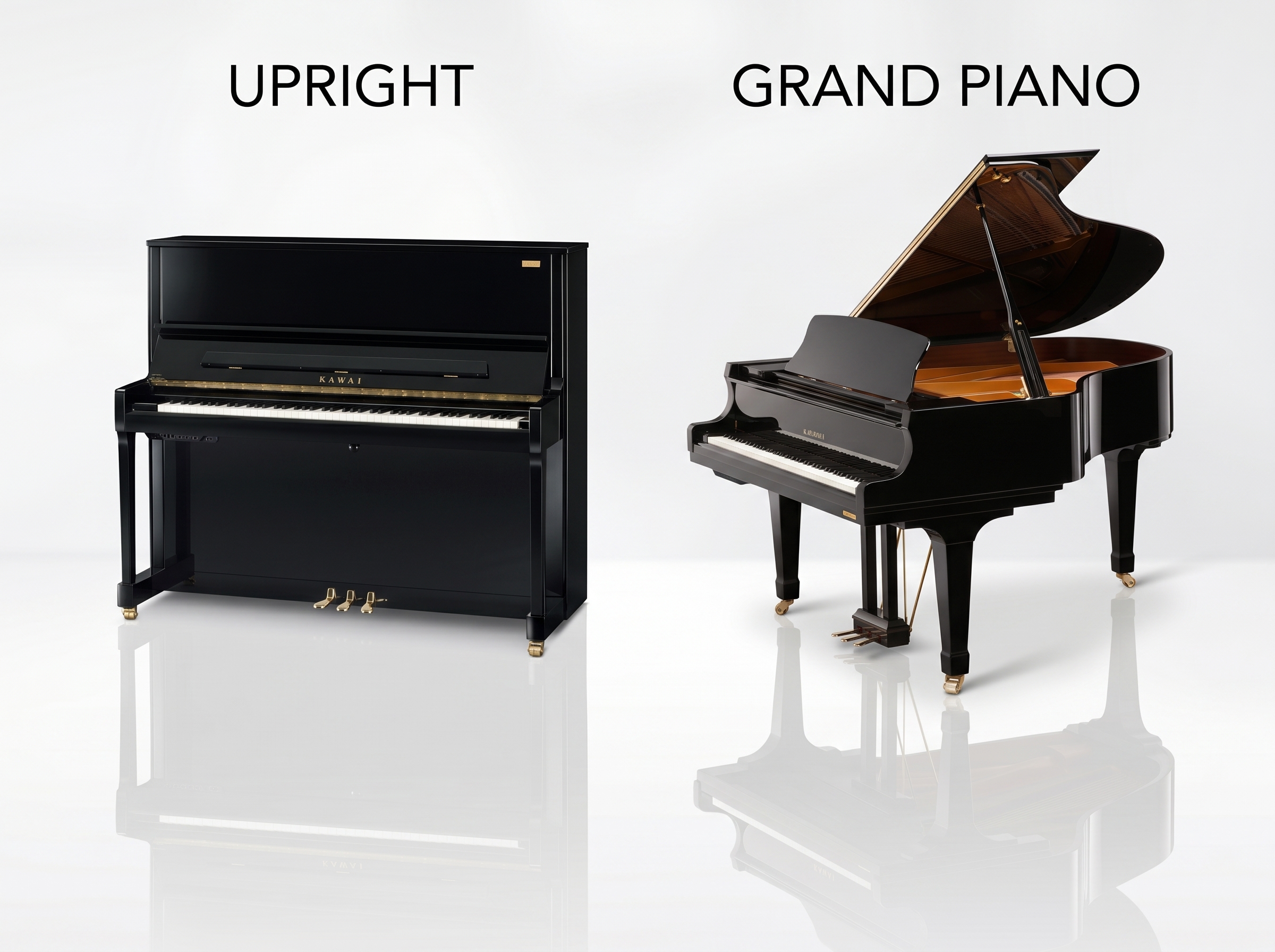
Acoustic pianos come in two forms:
- Upright (vertical) pianos stand against a wall with strings running vertically. They take up roughly the footprint of a bookshelf and are the most common choice for homes and studios.
- Grand pianos have strings running horizontally in a curved case. Their action is more responsive and their sound more open, but they need significantly more floor space and budget.
How a Digital Piano Works
A digital piano reproduces the sound of an acoustic piano electronically. Pressing a key triggers a sensor, and the instrument plays back a high-quality recording (or a physical model) of a concert grand through built-in speakers or headphones.
The best digital pianos use weighted, hammer-action keys designed to feel like an acoustic. Many now feature wooden keys, escapement simulation, and multiple velocity sensors to capture subtle dynamics.
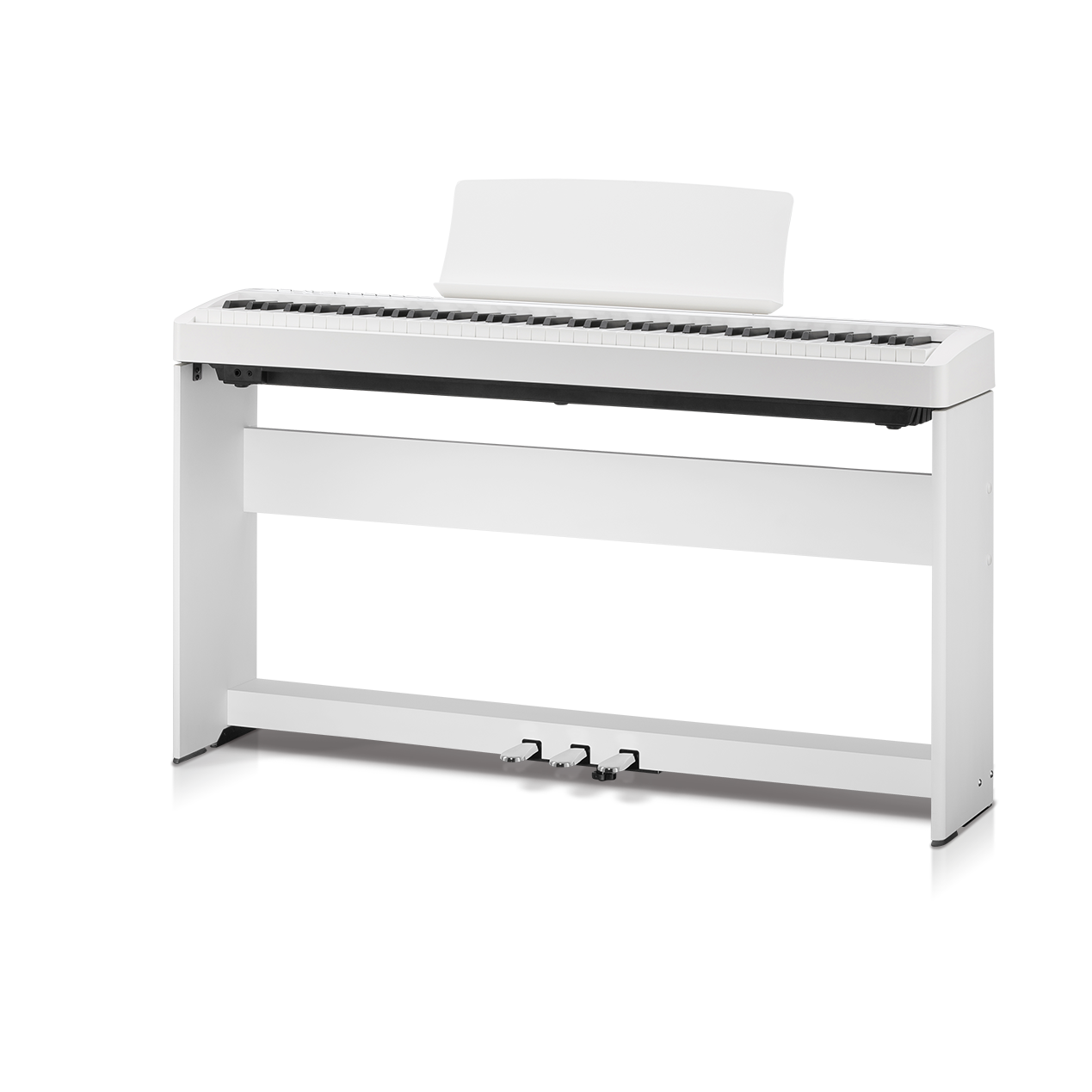
Digital pianos also range widely in form, from portable slab keyboards to console models with furniture-style cabinets, to hybrid instruments that put a real acoustic action inside a digital body.
The Key Differences
Sound
Acoustic: Rich, resonant, and three-dimensional. The strings, soundboard, and cabinet interact in ways that are difficult to fully replicate. The sound also changes with the room and with how you play.
Digital: Consistent and often excellent. Premium models sample or model world-class concert grands, and through good headphones or speakers the results are impressive. It won't respond to the room the way an acoustic does, but it also never goes out of tune.
Touch and Feel
Acoustic: The gold standard. The mechanical action gives real physical feedback that helps players develop control, dynamics, and technique.
Digital: Entry-level models can feel light or springy. Mid-range and up, weighted hammer actions are very convincing, and hybrid instruments close the gap almost entirely.
Maintenance
Acoustic: Needs tuning one to two times a year, plus occasional regulation and voicing. It's also sensitive to humidity and temperature swings.
Digital: Essentially none. No tuning, no climate concerns beyond normal electronics care.
Volume and Practice
Acoustic: Plays at one volume, its own. Apartment dwellers and late-night practicers may find this limiting.
Digital: Volume control and headphone output. You can practice at midnight without waking anyone.
Features
Acoustic: It's a piano. That's the feature.
Digital: Built-in metronome, recording, multiple instrument sounds, Bluetooth audio and MIDI, app connectivity, and lesson functions. Great for students, songwriters, and producers.
Size and Portability
Acoustic: Heavy and permanent. Moving one requires professional movers.
Digital: Console models are lighter than uprights; portable models can be carried to gigs or moved between rooms easily.
Price and Longevity
Acoustic: Higher upfront cost, but a well-made acoustic can last generations and hold resale value.
Digital: Lower entry price, but like any electronic device it will eventually be superseded by newer technology. Expect 10 to 20 years of useful life.
Which One Should You Buy?
Choose an acoustic piano if:
- You want the most authentic touch and tone for classical or serious study
- You have the space and a stable indoor climate
- You're comfortable with regular tuning
- You see this as a long-term, possibly multi-generational instrument
Choose a digital piano if:
- You need to practice quietly or live in shared housing
- Space or budget is limited
- You want recording, connectivity, or multiple sounds
- You need something portable or easy to move
Consider a hybrid if:
- You want a real acoustic action with the silence and features of a digital
A Note for Parents of Beginners
A common myth is that beginners should start on a cheap keyboard until they "prove" they'll stick with it. In practice, an instrument with a poor action makes progress harder and less enjoyable, which makes quitting more likely. Whether you go acoustic or digital, prioritize a full 88-key, weighted hammer action. That's the single most important feature for building good technique.
Final Thoughts
There's no wrong choice between acoustic and digital, only a wrong fit. Visit a showroom, play both, and pay attention to what makes you want to keep playing. The best piano is the one that gets used every day.
We at Aslanyan School of Music sell pianos through our shop, visit it below or contact us if you have any questions
https://www.aslanyanschoolofmusic.com/shop